Why Cuba May Become Trump’s Next Geopolitical Target
After Venezuela and rising tensions in the Middle East, Washington is increasing pressure on Cuba as the island faces one of its worst economic crises in decades.
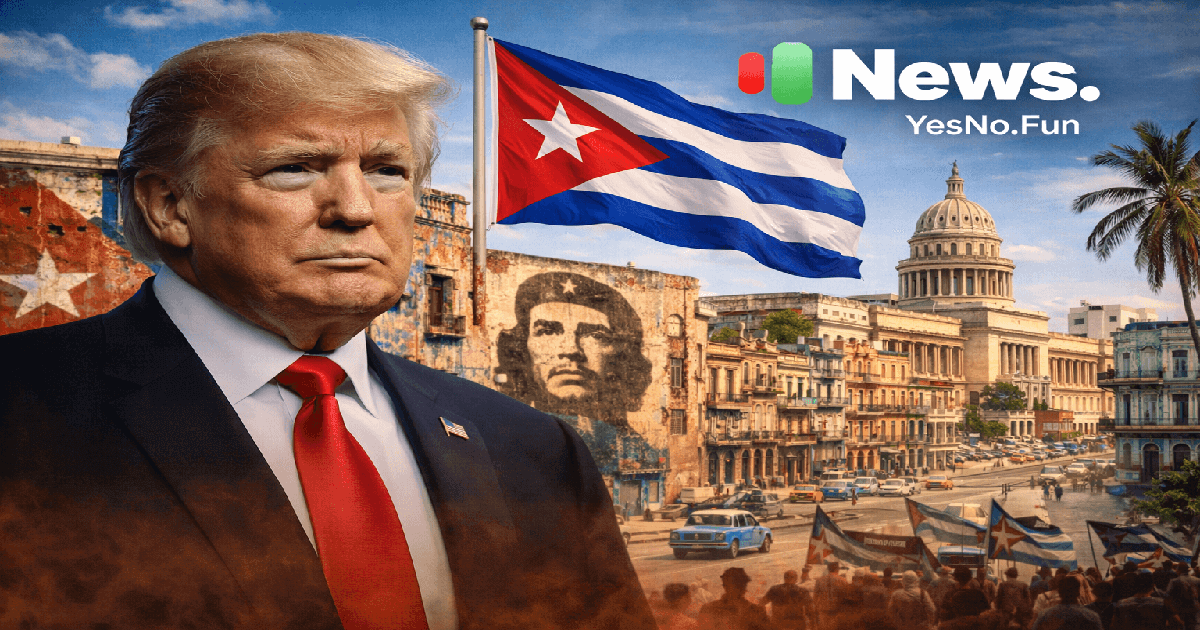
U.S. President Donald Trump has intensified pressure on Cuba as the island faces a deepening energy and economic crisis.
A Strategic Pivot in the Americas
Recent statements from U.S. President Donald Trump suggest that Cuba may be emerging as the next major focus of his administration’s foreign policy in the Western Hemisphere.
Speaking publicly after a series of military and diplomatic moves across Latin America, Trump indicated that political change in Cuba could come “very soon.” The remarks follow the dramatic removal of Venezuelan leader Nicolás Maduro earlier this year and growing pressure on left-leaning governments across the region.
The strategy appears to be part of a broader geopolitical doctrine sometimes described by officials as a revival of a Monroe-style approach — the idea that the Western Hemisphere should remain under strong U.S. influence and free from rival powers such as China, Russia, or Iran.
For Cuba, this shift is arriving at one of the most fragile moments in its modern history.
Cuba’s Deepening Energy Crisis
Cuba is currently facing severe fuel shortages and widespread electricity blackouts. In several cities, residents have experienced day-long power outages as the country’s aging energy infrastructure struggles to operate without sufficient oil supply.
For decades, Venezuela served as Cuba’s primary oil supplier. But the removal of Venezuelan leader Nicolás Maduro earlier this year disrupted that relationship almost overnight.
Without Venezuelan shipments, the island’s Soviet-era thermal power plants have struggled to generate enough electricity. In Havana and other cities, generators have gone silent, public transport has slowed, and even basic municipal services like garbage collection have been affected.
The energy crisis has spilled into everyday life. Businesses are closing earlier, tourism has been disrupted, and airlines have begun reconsidering refueling stops on the island. In some neighborhoods, residents have resorted to cooking with firewood during prolonged outages.
These economic pressures are widely believed to be part of Washington’s strategy to force negotiations or political reforms from Havana.
Washington’s “Maximum Pressure” Approach
Trump’s administration has intensified sanctions and diplomatic pressure on Cuba in recent months.
Officials in Washington argue that the island’s communist government has long relied on external allies to survive economically. By cutting off these external lifelines — particularly Venezuelan oil — the United States hopes to weaken the regime’s ability to maintain control.
The administration has also warned other countries against supplying energy resources to Cuba, threatening penalties against companies or governments that assist the island.
Supporters of this approach believe economic pressure could eventually push Cuban authorities into negotiations with the United States or even trigger internal political change.
Critics, however, argue that such policies primarily hurt ordinary Cuban citizens rather than the political leadership.
The Venezuela Precedent
One reason analysts are paying close attention to Trump’s comments on Cuba is the precedent set earlier this year in Venezuela.
In January, U.S. forces carried out a rapid military operation that resulted in the capture of Venezuelan leader Nicolás Maduro, who now faces drug-trafficking charges in the United States.
The operation reportedly lasted less than twenty minutes but resulted in dozens of casualties among Venezuelan security forces and allied personnel.
Following the operation, Venezuela’s interim leadership began cooperating with Washington on economic and energy reforms.
For some observers, the episode demonstrated how quickly regional geopolitics can shift when the United States applies both economic and military pressure simultaneously.
The same model, analysts suggest, may now be influencing Washington’s approach toward Cuba.
The Strategic Importance of Cuba
Despite its relatively small economy, Cuba holds major geopolitical importance.
The island sits less than 150 kilometers from Florida and has historically served as a key strategic location during Cold War tensions between the United States and the Soviet Union.
Even today, Cuba maintains diplomatic and economic ties with countries that Washington views as geopolitical rivals. China has expanded infrastructure cooperation across Latin America, and Russia has maintained political links with Havana.
From the perspective of the Trump administration, reducing rival influence in the region has become a central strategic objective.
This broader policy — sometimes referred to by officials as a modern reinterpretation of the Monroe Doctrine — emphasizes stronger U.S. influence across Latin America.
Political Pressure from Within the Region
Trump’s recent summit with several right-leaning Latin American leaders reflects shifting political alliances across the region.
Leaders from countries such as Argentina, El Salvador, and Ecuador have signaled support for tougher measures against criminal networks and regional instability.
At the same time, left-leaning governments in Mexico and Brazil have expressed caution about aggressive U.S. intervention in regional affairs.
This political divide could shape how any future actions involving Cuba unfold.
Could Cuba Actually See Political Change?
Whether the current pressure campaign will lead to political change in Cuba remains uncertain.
Cuba’s leadership has historically shown resilience during economic hardship, surviving decades of sanctions and the collapse of Soviet support in the early 1990s.
However, today’s situation presents new challenges. The country faces declining tourism revenue, aging infrastructure, and growing frustration among younger generations seeking economic opportunities.
If energy shortages and economic stress continue, internal pressure on the government could intensify.
Still, many analysts believe that sudden regime change remains unlikely without significant internal political developments.
A Region Entering a New Phase
Trump’s remarks about Cuba come at a time when global geopolitics appears to be entering a more confrontational phase.
The United States is already involved in heightened tensions in the Middle East, including the ongoing conflict involving Iran and Israel. At the same time, Washington is reshaping its relationships across Latin America.
Cuba now finds itself caught at the intersection of these strategic shifts.
For Washington, the island represents both a historical rival and a geopolitical opportunity. For Cubans, however, the immediate concern is more practical: electricity, fuel, and economic stability.
As the pressure campaign continues, the coming months may reveal whether Cuba becomes the next major flashpoint in an increasingly turbulent global political landscape.